


An electric vehicle (EV) is a vehicle that is powered by one or more electric motors, using electrical energy stored in batteries or other energy storage devices. Rather than using gasoline or diesel fuel, electric vehicles use batteries to store and provide the power needed to move the vehicle. They emit no tailpipe pollutants and have lower operating costs compared to traditional gasoline vehicles. Examples of electric vehicles include electric cars, electric bikes, electric buses, and electric trains.
Benefits of Electric Vehicle
Environmentally Friendly
Electric vehicles produce zero emissions, making them more eco-friendly than gas-powered vehicles.
Cost-effective
Electric vehicles are cheaper to operate and maintain compared to gas-powered vehicles. They also come with tax incentives and rebates in some areas.
Reduced Dependence On Fossil Fuels
Electric vehicles are powered by electricity, which can be generated from renewable sources like solar or wind power, reducing dependence on fossil fuels.
Quieter And Smoother Ride
Electric vehicles are known for their quiet and smooth ride, with no noisy engine or gearbox.
Improved Air Quality
As electric vehicles produce no tailpipe emissions, they contribute to cleaner air and better public health.
Better Performance
Electric vehicles have instant torque and acceleration, providing a thrilling driving experience.
Lower Maintenance Costs
Electric vehicles have fewer moving parts, which means fewer things to maintain or replace, reducing maintenance costs.
Energy Independence
Electric vehicles provide greater energy independence, reducing dependence on foreign oil imports.
Lower Carbon Footprint
Electric vehicles have a lower carbon footprint than gas-powered vehicles, helping to reduce global carbon emissions and mitigate climate change.
Public Health Benefits
Electric vehicles contribute to improving public health by reducing air pollution and noise pollution in urban areas.
-

Volkswagen Electric Suv 6-7 Seat 4X4 ID.6
The new car is built on the MEB pure electric platform and is the flagship vw electric SUV of the
Add to Inquiry -
Volkswagen Pure Plus Electric SUV ID.4 X 2023 Dual Motor Automatic
The ID.4X is based on the Volkswagen brand's global first pure electric SUVID. 4, and is also SAIC
Add to Inquiry -
Volkswagen ID3 Hatchback New Energy Electric Vehicle
The volkswagen ID.3 features a glossy front face light and surround dot matrix design, a C-pillar
Add to Inquiry -
Chevrolet Menlo 2023 5 Seat Electric Car for Adults
The Menlo car front face electroplated decorative strip and LED headlight design are integrated to
Add to Inquiry -
LIXIANG L7 Family SUV Hybrid Electric Car
The overall appearance of the vehicle looks round, simple, and stable. The Ideal LIXiang L7 car
Add to Inquiry -
Lixiang L8 Medium and Large Range Extenders SUV
The Ideal LIXiang L8 adopts the same closed front face design as the Ideal L9, with the same active
Add to Inquiry -
Lixiang L9 6 Seater Large Range Hybrid Electric SUV
The overall design style of the Ideal L9 is consistent with that of the Ideal ONE, Lixing Large
Add to Inquiry -
New Energy Vehicles Hozon Auto NETA GT
The exclusive mode of the cool sports car is also available on the Neta GT All-Electric Coupe. In
Add to Inquiry -
Hozon Neta S Electric Car Range Extender
As a sporty technology coupe, the Hozon NETA S also has outstanding performance.
Add to Inquiry -
NETA U Suv Electric Ev Suv Car Vehicle in China 2023
Firstly, from the appearance, the design of Hozon Nezha U is relatively atmospheric and stable,
Add to Inquiry -
Fuel Cell Electric Vehicle Toyota Bz4x
FAW fuel cell electric vehicle toyota bZ4X adopts a brand new design language exclusive to the bZ
Add to Inquiry -
5 Seat Smart Electric Cars 2023 Zeekr X
The Extreme Krypton X has transformed the low-frequency rear middle seats, creating the first four
Add to Inquiry


Why Choose Us?
Customer Satisfaction
We are committed to delivering high quality services that exceed our clients' expectations. We strive to ensure that our clients are satisfied with our services and work closely with them to ensure their needs are met.
One-stop Service
We promise to provide you with the fastest reply, the best price, the best quality, and the most complete after-sales service.
State-of-the-art Technology
We use the latest technology and tools to deliver high quality services. Our team is well-versed in the latest trends and advancements in technology and uses them to provide the best results.
Expertise and Experience
Our team of experts have years of experience in delivering high quality services to our clients. We hire only the best professionals who have a proven track record of delivering exceptional results.
Key Components of an All-Electric Car
Battery (all-electric auxiliary)
In an electric drive vehicle, the auxiliary battery provides electricity to power vehicle accessories.
Charge Port
The charge port allows the vehicle to connect to an external power supply in order to charge the traction battery pack.
Transmission (electric)
The transmission transfers mechanical power from the electric traction motor to drive the wheels.
Electric Traction Motor
Using power from the traction battery pack, this motor drives the vehicle's wheels. Some vehicles use motor generators that perform both the drive and regeneration functions.
Onboard Charger
Takes the incoming AC electricity supplied via the charge port and converts it to DC power for charging the traction battery. It also communicates with the charging equipment and monitors battery characteristics such as voltage, current, temperature, and state of charge while charging the pack.
DC/DC Converter
This device converts higher-voltage DC power from the traction battery pack to the lower-voltage DC power needed to run vehicle accessories and recharge the auxiliary battery.
Thermal System (cooling)
This system maintains a proper operating temperature range of the engine, electric motor, power electronics, and other components.
Traction Battery Pack
Stores electricity for use by the electric traction motor.
Power Electronics Controller
This unit manages the flow of electrical energy delivered by the traction battery, controlling the speed of the electric traction motor and the torque it produces.
There are three types of electric vehicles available on the market

Battery Electric Vehicles (BEVs)
Drawing of a plug-in hybrid electric vehicle, which features a gasoline engine, a small electric motor, and a battery, and a hybrid electric vehicle, which features an electric motor and two batteries. Both vehicles have plugs for recharging.
Both BEVs and PHEVs can be recharged from external sources and are capable of operating with zero tailpipe emissions.
Battery electric vehicles (BEVs)—also referred to as “all-electric vehicles”—run on electricity only and are recharged from an external power source. They are propelled by one or more electric motors powered by rechargeable battery packs.
Almost all BEVs can travel at least 100 miles on a charge, and many new vehicles coming on the market offer an all-electric range of 200-300 miles or more. Included among BEVs are battery-powered buses, such as BEBs and ESBs.
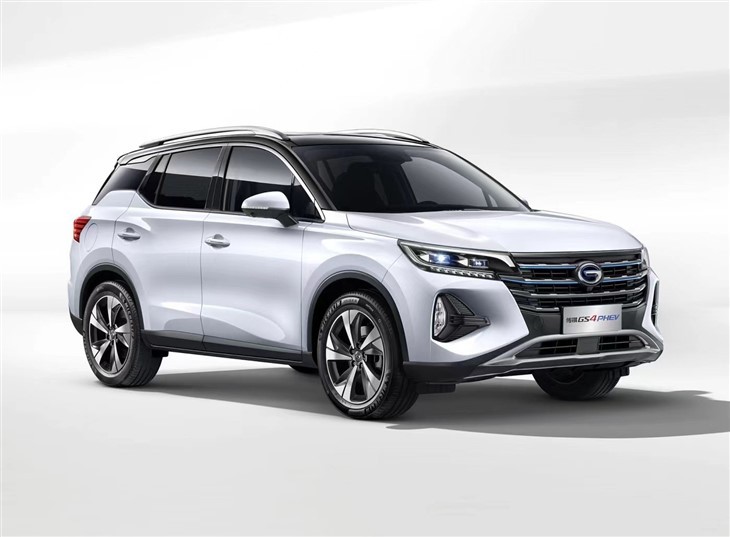
Plug-In Hybrid Electric Vehicles (PHEVs)
Plug-in hybrid electric vehicles (PHEVs) also use batteries to power an electric motor and can be recharged from an external power source, but they incorporate a smaller internal combustion engine that can recharge the battery (or in some models, directly power the wheels) to allow for longer driving ranges.
PHEVs can usually drive moderate distances in “EV mode” using only the battery, typically from 20 to 50 miles in current models. This significantly reduces their gasoline use and emissions under typical driving conditions, since most trips are short.
PHEVs use 14 to 47 percent less fuel than conventional vehicles if their batteries are fully charged. When electricity is unavailable, PHEVs can run on conventional fuel (i.e., gasoline or diesel).

Fuel Cell Electric Vehicles (FCEVs)
Fuel cell electric vehicles (FCEVs) use a highly efficient electrochemical process to convert hydrogen into electricity, which powers an electric motor. FCEVs on the market today are not designed for recharging their battery from an external source. Rather, they are fueled with compressed hydrogen gas that is stored in a tank on the vehicle.
This toolkit uses the term “EV” to refer to both BEVs and PHEVs 1, since these vehicles can be recharged from external sources and are capable of operating with zero tailpipe emissions. This toolkit focuses primarily on EVs and does not address HEVs and FCEVs unless otherwise noted.
How does an electric vehicle work
EVs have an electric motor instead of an internal combustion engine (ICE). The vehicle uses a large traction battery pack to power the motor and must be plugged in to a charging station or wall outlet to charge. Most EVs use lithium-ion batteries, which have higher energy density, longer life span and higher power than most other practical batteries.
There are three main types of EVs. Hybrid EVs (HEVs) and plug-in hybrid EVs are both powered by petrol and electricity. The former generates energy through the car's own braking system to recharge the battery, while the latter can recharge through any external source of electricity. Meanwhile, battery EVs (BEVs) are fully electric, meaning that the vehicle emits no emissions from the exhaust and does not contain the typical liquid fuel components, such as a fuel pump, fuel line, or fuel tank.
Lithium-ion batteries
Batteries are the backbone of electric vehicles. Lithium-ion batteries are commonly used in EVs because they are lightweight, highly efficient, and have a longer lifespan.
Aluminum
Aluminum is used extensively in EVs because it is lightweight and strong. It is used in the body, chassis, and suspension parts of electric cars.
Copper
Copper is used extensively in electric motors and power electronics. It is used in the wiring, windings, and connectors of electric cars.
Glass
EVs have large windshields and windows to maximize visibility, and the glass used is typically lighter and stronger than that used in traditional cars.
Plastic
Plastic is used in EVs for various parts, including the interior components, body paneling, and in the exterior finish.
Regenerative Braking System
This system captures and stores energy such as heat and kinetic energy and uses it to recharge the batteries.
Copper
Copper is used extensively in electric motors and power electronics. It is used in the wiring, windings, and connectors of electric cars.
EVs are generally more expensive to buy than their petrol or diesel equivalents for outright purchases. Battery technology is expensive, and because batteries in electric cars need to be able to hold vast amounts of charge to make the cars practical for most drivers, they have to be built using expensive materials, most of which are tough to procure.
EVs also often have long recharge times compared to the relatively fast process of refuelling a tank. While it takes a couple of minutes to fuel a petrol-powered car, an EV can take four to six hours to become fully charged (although this is now improving with the development of “rapid-charge” systems).
Many EVs have a limited range due to the low energy density of batteries compared to the fuel of ICE vehicles. Most EVs have a relatively short driving range of between 100-150km. However, the ranges of electric cars are increasing as newer models hit the market.
Batteries do wear out so replacement batteries will eventually be needed. Most car manufacturers warrant EV batteries for around eight years. But it should be noted that, when an EV battery reaches the end of its vehicle life, it may still have secondary value – by storing electricity from solar PV panels, for example.

The three main ways to charge an EV are

Level 1 Charging
Using a 120-volt outlet, Level 1 home charging requires no special equipment, but it provides the slowest charging cycle compared to specialty EVSEs. This charging method provides an EV with 2 to 5 miles of range each hour of charging.

Level 2 Charging
Using a 220- or 240-volt outlet, Level 2 charging requires specialty equipment in home or use of a public charging station.
Also works for all BEVs. This EVSE is much faster than a Level 1 charger, compatible with all plug-in vehicles, and provides 10 to 25 miles of range each hour of charging.

Level 3 DC Fast Charging
This specialty EVSE converts AC electricity into DC electricity within the charging station, which delivers energy into an EV' s battery pack faster than Level 1 and 2 chargers. These fast-charging stations can charge a traction battery pack from 15 to 45 minutes , but they are only compatible with certain plug-in vehicles.
What's the environmental impact of hybrid vs. electric cars
Because they have an internal combustion engine that burns gasoline (a fossil fuel), hybrid cars emit some gases. The one exception is the fuel cell electric vehicle (FCEV), a hybrid that uses hydrogen instead of gasoline and has no tailpipe emissions.
Electric vehicles have no tailpipe emissions. But keep in mind that the electricity used to charge an EV may come from a power plant fueled by oil, natural gas, or coal. Also, hybrids and electric vehicles use electric car batteries that will eventually need to be disposed of, and we don't yet fully understand the environmental impact of that.
What are the applications of electric vehicles
Electric vehicles (EVs) have a wide range of applications across various sectors. As the technology continues to develop and improve, electric vehicles are becoming increasingly popular due to their environmental benefits, efficiency, and potential for reducing reliance on traditional fossil fuels. Here are some of the main applications of electric vehicles
Personal Transportation: Electric cars and electric bicycles are becoming more popular for personal transportation. They offer an eco-friendly alternative to traditional gasoline-powered vehicles and provide reduced emissions and lower operating costs.
Public Transportation: Electric buses and electric trains are being adopted by many cities and countries as part of their efforts to reduce emissions and improve air quality. Electric public transportation can significantly decrease pollution in urban areas.
Commercial Fleets: Many companies and organizations are incorporating electric vehicles into their fleets. This includes delivery vans, trucks, and even electric semitrucks for freight transportation. Electric fleet vehicles offer cost savings on fuel and maintenance, along with reduced environmental impact.
Shared Mobility Services: Electric vehicles are popular choices for shared mobility services like ride-hailing companies and electric scooter sharing platforms. The ability to recharge EVs at centralized locations makes them suitable for shared-use scenarios.
Last-Mile Delivery: Electric cargo bikes and small electric delivery vehicles are increasingly used for last-mile delivery in congested urban areas. They help reduce traffic and emissions while improving delivery efficiency.
Government and Municipal Use: Many government agencies and municipalities use electric vehicles for various purposes, such as law enforcement vehicles, postal delivery, and maintenance fleets. This demonstrates a commitment to sustainability and reduced carbon footprint.
Racing and Motorsports: Formula E, an all-electric racing series, showcases the potential of electric vehicle technology in high-performance applications. Motorsports are used as a platform for technological development and to promote EVs to a broader audience.
Off-Road and Utility Vehicles: Electric technology is also being applied to off-road vehicles, golf carts, and utility vehicles used in industries like agriculture, mining, and construction.
Recreational Vehicles: Some manufacturers are developing electric motorcycles and electric boats for recreational use, offering enthusiasts a clean and quiet way to enjoy their hobbies.
Energy Storage: Electric vehicles can also serve as energy storage devices. Through vehicle-to-grid (V2G) technology, EV batteries can discharge energy back into the grid during peak demand, helping stabilize and support the electrical grid.
Agriculture: In some cases, electric tractors and agricultural equipment are being developed and deployed for farm use, offering potential fuel savings and lower emissions.
Our Factory
The current business area of Huafa Auto is nearly 20000 square meters, and there are four authorized 4S stores, respectively operating SAIC Volkswagen, Skoda, Chevrolet, GAC Trumpchi and other authorized brands; The existing high-end car beauty and maintenance brand - "Huafa Youche", with business distribution in areas such as Meixi, Nanxi, Wanzai Convention and Exhibition Center, and Jinwan Mall in Zhuhai.


Our Certificate


FAQ
As one of the most professional electric vehicle manufacturers and suppliers in China, we're featured by quality products and low price. If you're going to wholesale or buy discount electric vehicle, welcome to get quotation from our factory.
electric sports cars affordable, Hozon Electric Car, Leapmotor presents electric sedan C01